The Brief
In February 2023, Ericsson and Digital Nasional Berhad (DNB) brought Malaysia's 5G standalone network to Curtin University Malaysia in Miri, Sarawak, combining the 700MHz, 3.5GHz, and 28GHz mmWave bands through carrier aggregation to deliver speeds of up to 7Gbps. That number is genuinely impressive. It's also meaningless to most people watching a live demo, unless there's something running on the network that a slower connection simply couldn't do.
That was the brief we worked on with Ericsson: not a speed test, but a real application built for what a 5G SA network with network slicing makes possible, from low latency to dedicated bandwidth to enough headroom for something more demanding than a video call.
What We Built
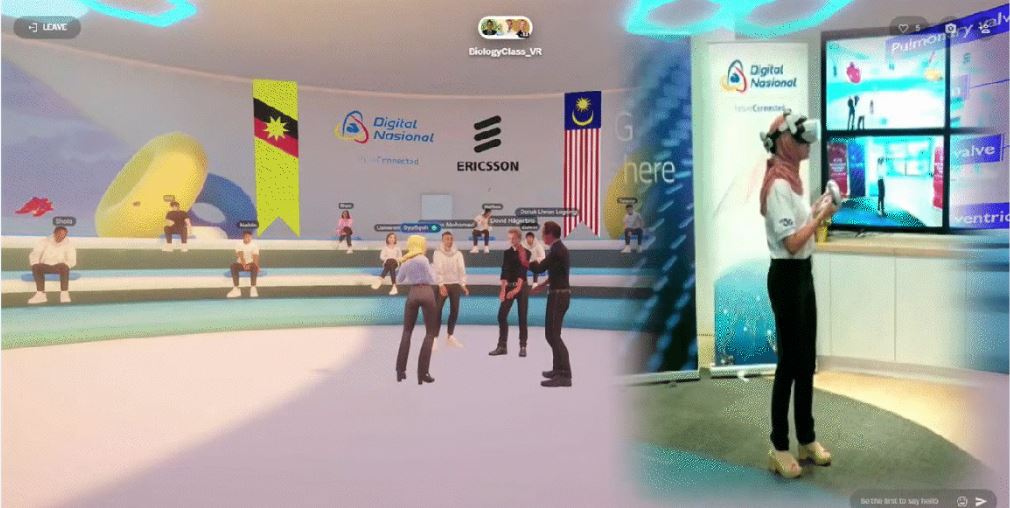
We proposed and built an interactive VR classroom on Meta Quest headsets, designed to put a lecturer and a room full of students in the same virtual space despite being 1,400km apart. On the day, students at Curtin Malaysia in Miri put on the headsets and joined live sessions taught in real time by faculty at UTM-Ericsson's Innovation Centre 5G in Kuala Lumpur, including a cardiac anatomy lecture and an engineering class, all streamed over the dedicated 5G slice Ericsson and DNB had provisioned for the showcase.
Our team handled the on-site setup and ran the VR side of the demo throughout the event, from headset calibration to keeping each session stable while government officials, telco executives, and press moved through the room.
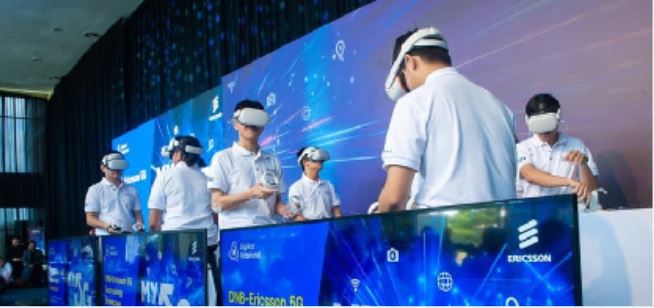
Students on stage, live in the VR classroom over the 5G SA network
Inside the VR classroom, running live at the showcase
Why It Had to Be VR
A video call over 5G would have proven the network was fast. It wouldn't have proven anything a good 4G connection couldn't already do reasonably well. Real-time, multi-user VR is different. It needs the latency and bandwidth headroom that only a network like this can guarantee, which is exactly why it made the point Ericsson and DNB needed to make. The technology wasn't the demo. It was the thing that made the demo possible.
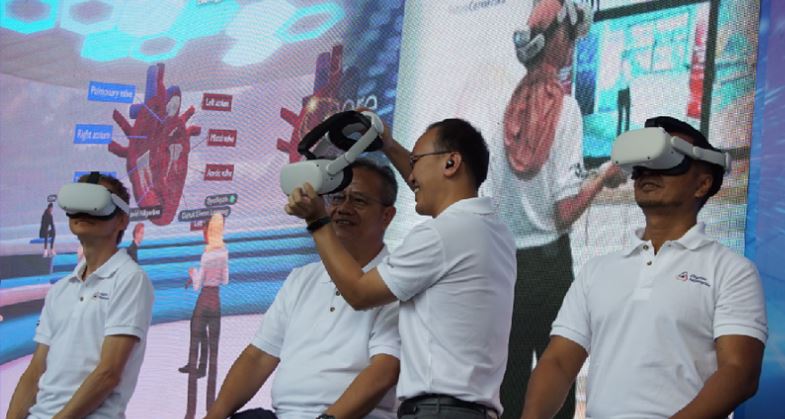
Officials trying the VR classroom firsthand on the showcase floor
The Reception
The showcase made national tech news, with coverage from Curtin University Malaysia, The Vibes, and SoyaCincau all covering the 7Gbps benchmark. Deputy Minister Datuk Liwan Lagang called it a preview of what 5G could bring to education and healthcare in Malaysia.
Ericsson and DNB built the network, and rightly took the spotlight for it. Curtin and UTM delivered the education story. Our name isn't in those headlines, and that's fine. It's usually how this kind of work goes. What we brought to the table was the use case and the experience that made a bandwidth number worth writing about in the first place. That's the role we're built for: the technology partner that turns a new network, or any new capability, into something people can actually stand inside.
- Bandwidth needs a use case. A 7Gbps benchmark is just a number until something is built that could only run at that speed.
- Real-time multi-user VR is a genuine 5G SA application. It's one of the clearest ways to demonstrate what low latency and network slicing actually enable.
- Connectivity is the foundation immersive technology is built on. Every step forward in network capability opens a new class of XR use case. We track that shift closely, and we'd rather propose what's possible next than wait for a brief that spells it out.
Have a use case in mind?
We design and build VR, AR, and immersive experiences for telcos, enterprises, and institutions, matching the technology to the goal.
Get in TouchLearn more about our Virtual Reality services or explore our full portfolio.